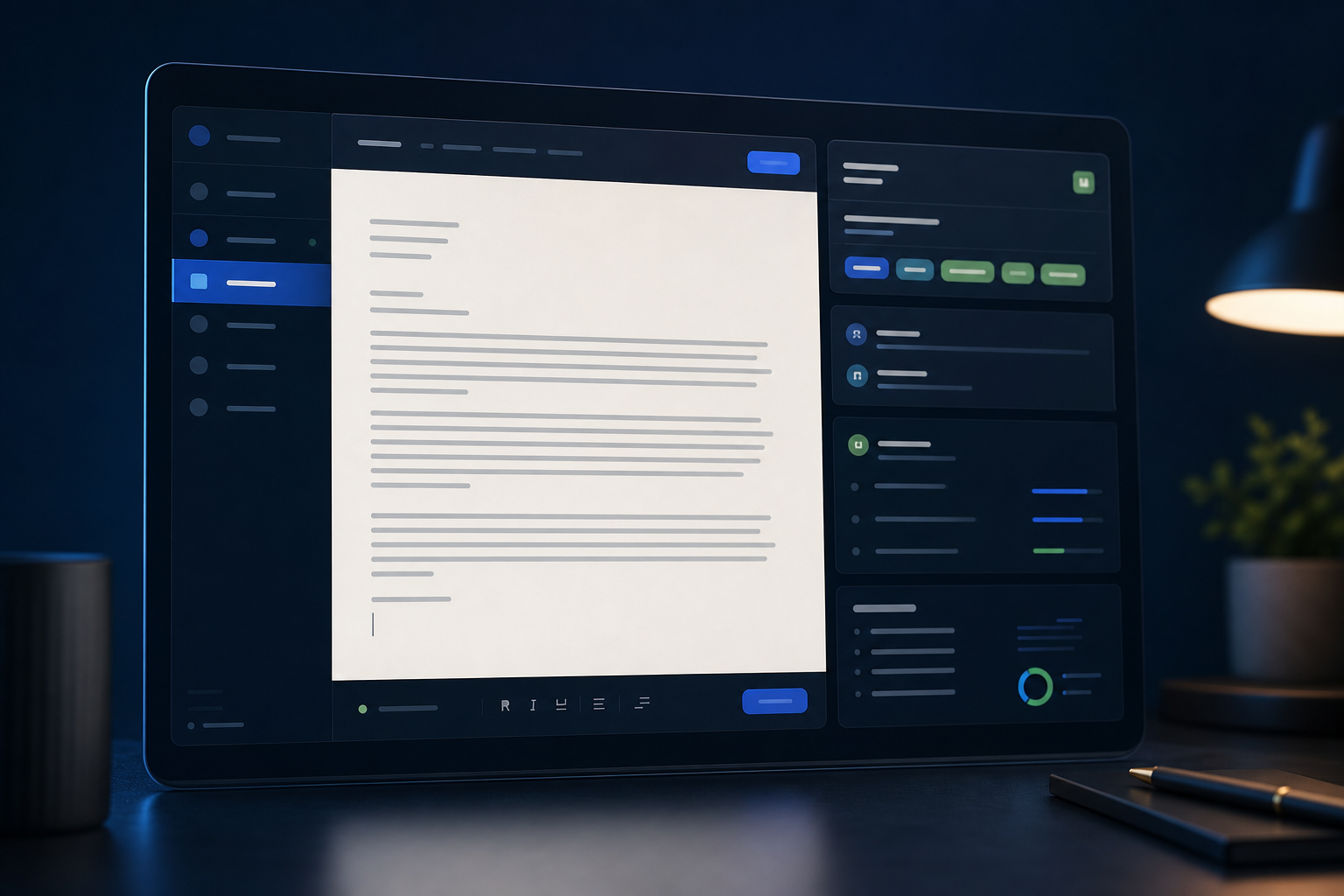
See how to align your resume with a specific job description so your experience maps more directly to what the employer needs.
This resource is written for job seekers who want to make stronger, clearer decisions before they apply. The aim is not to overwhelm you with theory. It is to show the parts of the process that create the most visible improvement in screening and recruiter review.
What tailoring really means
Tailoring does not mean inventing a new professional identity for every application. It means choosing the language, examples, and emphasis that make your relevance clearest for a specific role.
Employers rarely reject candidates because their resume is bad in general. More often, the resume feels too broad. Tailoring solves that by helping the document point more directly to the position in front of you.
Mindset shift
A tailored resume makes the fit easier to understand.
The recruiter should not have to work hard to connect your background to the role's priorities. The document should do that work for them.
Which sections to change first
The highest-leverage sections are usually the headline or summary, the skill emphasis near the top, and the first few bullets under your most recent experience. These areas shape the first impression quickly.
You do not usually need to rewrite older roles in depth unless they are central to the target job. Start where the recruiter's eye lands first and where the ATS is most likely to capture your positioning.
Practical checklist
- Refine the top summary to match the target function.
- Surface the most relevant skills earlier on the page.
- Reorder bullets so the strongest role match appears first.
How to mirror a job post naturally
The safest approach is to translate your own work into the employer's language where the overlap is genuine. If the posting says stakeholder alignment and your resume says cross-team coordination, that may be a sensible adjustment if the meaning is the same.
The key is to avoid copying whole phrases that you cannot support. Tailoring is about clearer framing, not mimicry. Your wording should still sound like a believable description of your background.
Good practice
Mirror the employer's language where the substance already exists.
That helps the ATS surface your resume and helps the recruiter see that your experience belongs in the same category as the role.
A repeatable tailoring workflow
A sustainable tailoring workflow starts with a strong master resume. From there, you duplicate it, review the job post, identify the most repeated requirements, and adjust only the sections that most affect perceived fit.
This method saves time because you are not rebuilding the entire page. You are making targeted edits that improve match clarity. Over time, you can also build versions for different role families and shorten the process further.
Practical checklist
- Keep one detailed master resume as your source document.
- Tailor by role family instead of reinventing every version.
- Use a final comparison check before submitting the application.
Key takeaway
Tailoring should be repeatable, not exhausting.
The best system lets you move quickly while still making each application feel deliberate and role-specific.
Frequently asked questions
These are the practical questions candidates usually ask once they begin applying this guidance to a real resume.
Conclusion
Resume tailoring is one of the highest-return habits in the application process because it improves both discoverability and clarity of fit. It helps the ATS recognize your relevance and helps the recruiter understand it faster.
If you want stronger results without burning out, focus on a repeatable system: strong master resume, targeted edits, and a final match check before every submission.

Author bio
Marcus Reid
Job Search Strategy Editor
Marcus helps candidates improve resume targeting, application strategy, and the clarity of fit between experience and opportunity.
Social links